Intelligent decentralized wind infrastructure.
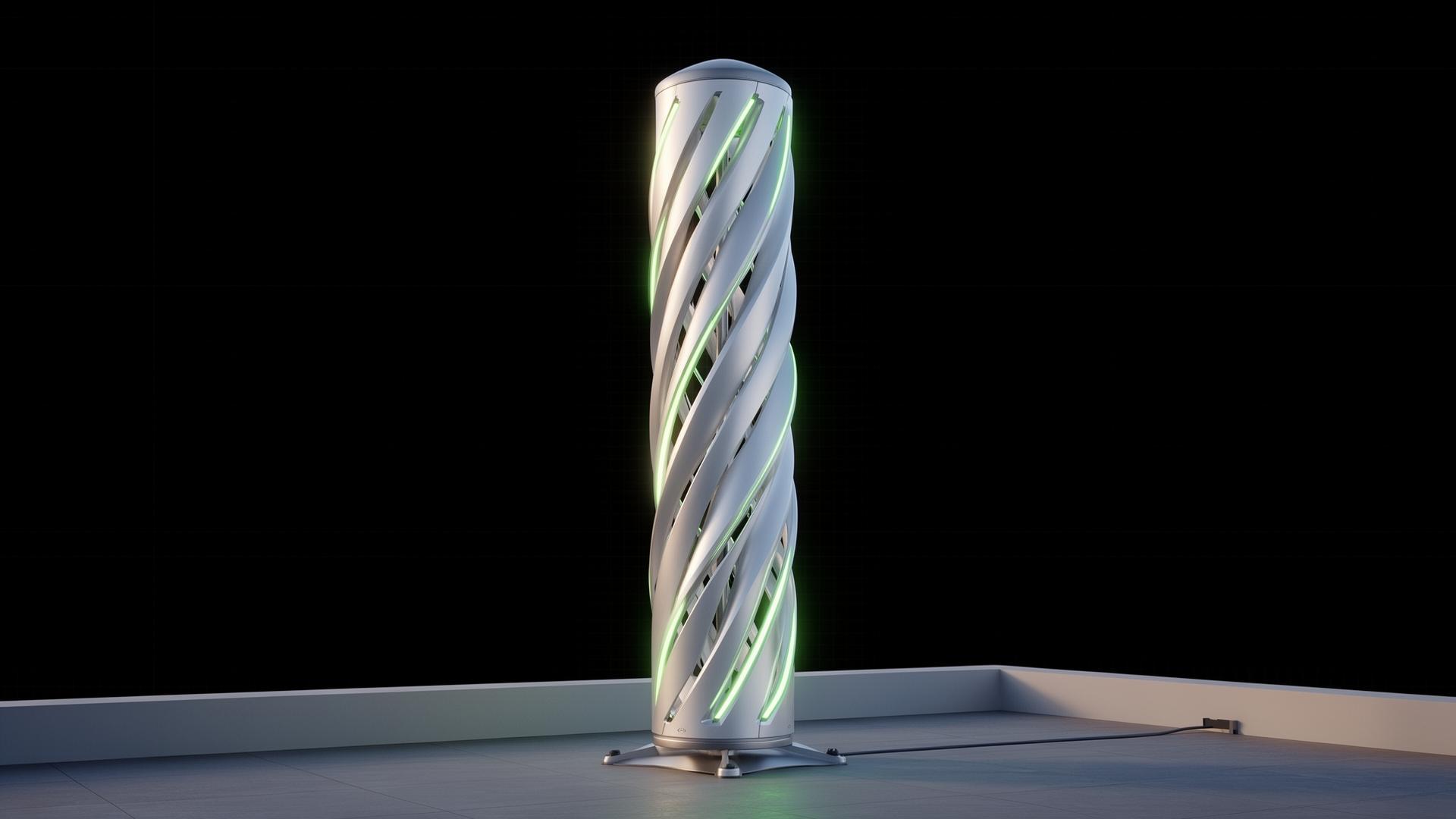
An advanced bladeless wind turbine platform designed to support the next generation of intelligent decentralized energy infrastructure — integrating proprietary vertical-axis turbine architecture with advanced magnetic levitation generator technology.
Engineered for resilience, adaptability, and low maintenance.
Unlike traditional large-scale wind systems that depend on high wind speeds, large footprints, and centralized deployment models, the Aether platform is designed around compact deployment, operational resilience, lower maintenance requirements, and intelligent infrastructure integration.
The system is being developed for deployment across commercial, industrial, municipal, community, and remote infrastructure environments where localized generation, operational continuity, and adaptive energy coordination are becoming increasingly important.
Efficient across diverse environmental conditions.
The Aether platform is being designed to operate efficiently across urban environments, coastal regions, islands, remote communities, and infrastructure locations exposed to challenging weather conditions and grid instability.
By combining decentralized generation with intelligent operational systems, the platform is intended to support a broader shift toward more resilient and adaptive infrastructure ecosystems capable of integrating localized generation, storage, infrastructure analytics, and smart coordination technologies.
- Decentralized distributed generation
- Resilient microgrid integration
- Intelligent operational coordination
- Infrastructure adaptability
- Advanced efficiency systems
- Low-maintenance infrastructure environments
- Grid resilience and continuity support
- Remote and energy-vulnerable environments
An interconnected ecosystem — not isolated hardware.
New Paradigm Energy views the future of energy infrastructure as an interconnected ecosystem rather than isolated generation hardware. The Aether platform is being developed alongside intelligent operational systems, infrastructure analytics, smart-grid coordination concepts, and future infrastructure management technologies designed to improve visibility, efficiency, adaptability, and long-term operational resilience.
This broader systems approach supports our long-term vision of helping shape decentralized infrastructure ecosystems capable of integrating generation, storage, analytics, coordination, and operational intelligence into a more adaptive energy environment.
Why the Aether Turbine is different.
Growth
Small wind is one of the fastest-growing and most underutilized sectors within renewable energy generation.
Efficiency
Through prototype and field certification testing to date, the NPE small wind turbine is on track to be the highest-performing, most efficient, and most reliable turbine in its class.
Noise
The Aether Turbine is substantially quieter than any competitive turbine on the market today.
Applications
Ideal for high-rise buildings, public spaces, and rural areas not suited for traditional large wind installations.
Cost
Pricing is on par with current small-to-medium commercial wind products, but greater efficiency, reliability, and lower maintenance deliver superior long-term ROI.
A compact, modular design with broad reach.
The compact footprint, modular flexibility, and resilient design philosophy behind the Aether platform create potential applications across a broad range of future infrastructure environments.
- Commercial facilities
- Industrial operations
- Municipal infrastructure
- Ports and transportation systems
- Remote and island communities
- Resilient microgrid systems
- Sustainability-focused developments
- Distributed infrastructure networks
- Energy continuity applications
As global infrastructure evolves toward more decentralized and intelligent operational models, compact resilient generation technologies will play an increasingly important role within future energy ecosystems.
Why add wind to the renewable equation?
Solar production typically reaches peak performance during the spring and summer months, while wind generation often strengthens during fall and winter conditions. Combined into a hybridized generation environment, annual energy production becomes significantly more stable, balanced, and resilient throughout the year.
Illustrative — wind strengthens as solar dips, producing a flatter combined output across the year.
- More stable year-round energy generation profiles
- Reduced dependence on a single generation source
- Improved resilience during seasonal production fluctuations
- Greater operational continuity across changing weather
- Enhanced compatibility with decentralized microgrid environments
- Increased infrastructure adaptability and redundancy
Higher energy density. Smaller footprint.
The hybrid configuration allows for smaller solar array requirements without sacrificing annual kWh production potential, helping reduce overall land usage and infrastructure footprint while maintaining strong system performance.
The platform is designed to support up to five independent power sources on a single integrated structure, creating opportunities for highly adaptable distributed generation environments capable of integrating multiple renewable and storage technologies into a unified operational ecosystem.